Cold plunge timer: how long, and timing the contrast
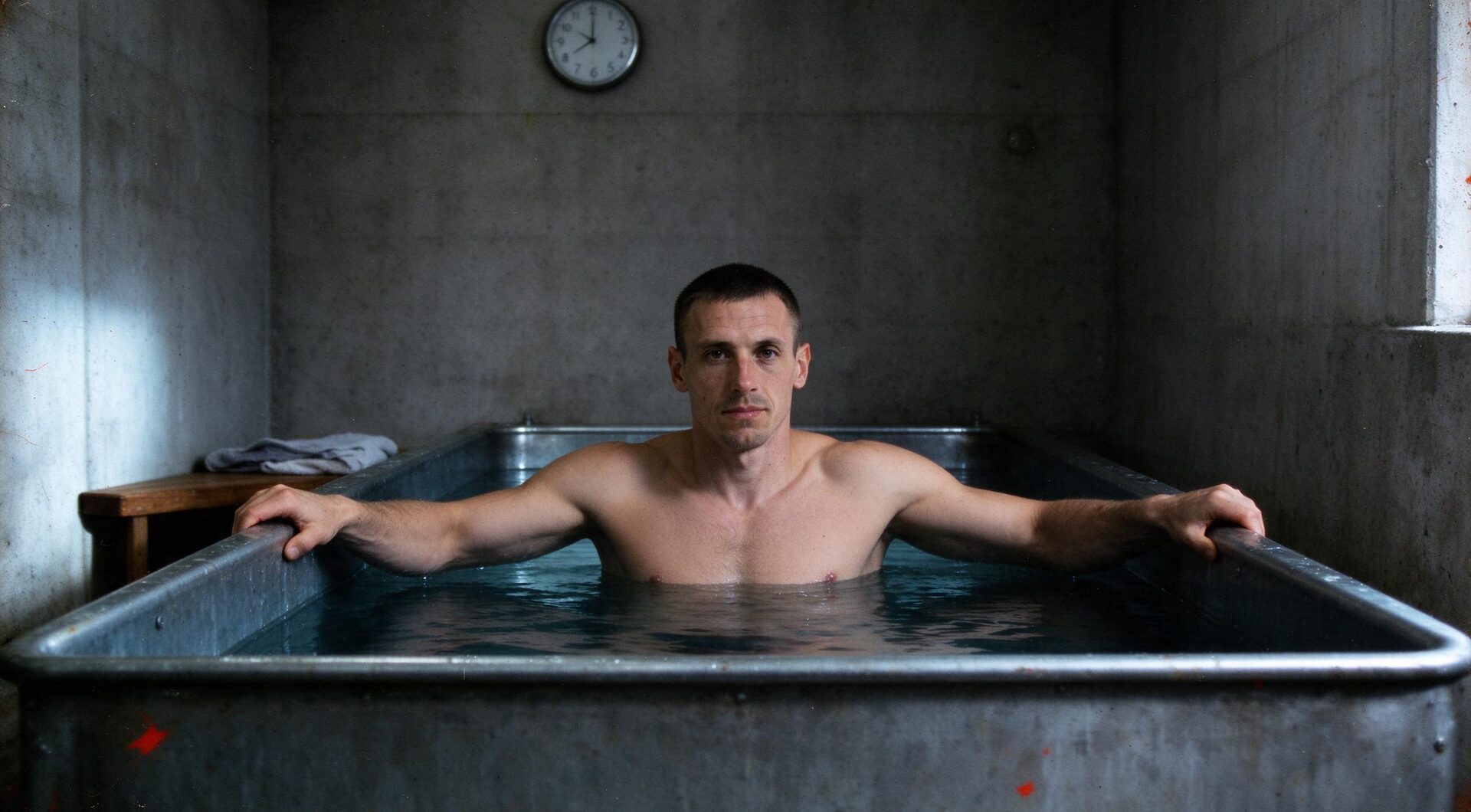
“How long do I stay in?” Ask it at any plunge tub and you will collect three confident answers inside a minute: two minutes, three to five, whatever you can stand. The confidence is misplaced. The dose is two numbers, and they trade against each other — how cold the water is, and how long you stay in it. Three minutes is a mild outing at 54°F and a serious commitment at 40°F.
This piece is about that dose, and about the job a stopwatch cannot do at a tub: run a contrast session, where hot and cold alternate on one clock.
The dose is a pair of numbers
Water temperature sets the menu; the minutes follow it. The ranges people actually train in, as starting points rather than prescriptions:
| Water temperature | Working range |
|---|---|
| 50-59°F (10-15°C) | 3-5 minutes |
| 45-50°F (7-10°C) | 2-3 minutes |
| below 45°F (7°C) | 1-2 minutes |
One rule sits inside the grid: colder water means a shorter stay, and no practice anywhere gets longer as the water gets colder.
If the grid reads looser than you hoped, the research record explains why. A 2025 systematic review of cold-water immersion for health and wellbeing, eleven trials and 3,177 participants — pooled cold showers, ice baths and plunges at 7 to 15°C — and the durations those trials tested ranged, in the authors’ words, “from 30 seconds to 2 hours”. Nobody has settled the dose. The recovery literature leans the way practice does: a 52-study meta-analysis in Sports Medicine concluded that “shorter durations and lower temperatures may improve the efficacy” of immersion after high-intensity exercise. Shorter and colder is where the evidence and the practice both point.
The first minute is the hard part
Entry is its own event. Cold water drives the breathing fast and shallow for the first minute or so, and the entire job then is getting the breath back down. Exhale as you get in, and settle into a slow pattern. The square pattern people use at a desk works at the tub edge: four in, four held, four out, four held, with the bell keeping the count, because your head will not.
What happens after that first minute, the rounds of paced breathing people run inside the water, has a piece of its own. Cold immersion rounds covers the counting problem in detail, and the mechanics it lands on apply here unchanged: a count-in so entry lands on second zero instead of easing in whenever, entry and exit cues that sound nothing alike, and the phone parked well away from splash range with the screen off, because between the fog and the numb fingers the screen was never going to be readable anyway.
Why the dose needs a clock
Cold warps timekeeping from the inside. Seconds stretch and compress at random; on your own sense alone, the two-minute dose you planned becomes “probably about two minutes” — and the honest answer, asked later, is that you do not know. The dose was decided while you were warm and thinking clearly. The timer’s job is to still be holding that number when you are neither.
A plunge session also has the same skeleton every interval session runs on, the four numbers an interval is built from: a phase, its length, the rest after it, a round count. That is why a workout timer fits a practice with no workout in it, and why the presets work the same way here: save “Plunge 2/1 x3” once, before anything is cold, and every session after that starts with one tap instead of standing at the tub re-entering numbers. If you track weekly minutes across sessions, the presets keep the tally honest for free.
Contrast: two phases, one clock
Contrast is the hot-cold alternation: sauna or hot shower, then the plunge, then back, several times through. On a clock it is two unequal phases alternating, roughly three to ten minutes hot and one to three minutes cold, three to five rounds. The phases are different lengths on purpose — rewarming takes longer than cooling — and the session needs the alternation held exactly, a strange thing to ask of a mind that is busy being either very hot or very cold.
Build it as a list of rounds where the two lengths alternate, the same list-of-rounds shape a multi-block session uses, so nothing needs editing mid-session. Give the two transitions different sounds: the bell that ends the hot phase must not sound like the bell that ends the cold one, or you will be halfway out of the sauna before you know which bell that was. Save it under a name. Contrast 3/1 x4 is the whole plan in six characters, and next time it is one tap.
The hot phase itself is three minutes of deliberate nothing — a timed sit on a hot bench — and the cold phase asks for the same stillness at the exact moment thinking is hardest. Which is rather the point: contrast is interval structure doing a job that has nothing to do with training, one of the structures that left the gym a while ago.
End on cold or end on hot? Practice is split. The finish-cold camp argues the adaptation; the finish-hot camp argues that a session should end warm. Research has not picked a winner. Decide while you are warm, set the round count to match, and the timer carries either ending.
Getting out is also part of the dose
The clock holds the plan; your body outranks the clock. The signs to get out regardless of what the screen says: shivering that turns violent or stops being productive, numbness spreading past your hands and feet, dizziness, breath that will not settle back down. Any one of them ends the session. And leave breath-holding out of it entirely: cold water plus a held breath is a genuinely dangerous pair, in any temperature, at any fitness level.
The early sessions should not happen alone, and if you have a heart condition or high blood pressure, the conversation with a doctor comes before the first plunge. Rewarming is clothes and movement at ordinary room warmth — and in a contrast session the rewarming is scheduled, which is the entire design.
Two numbers, decided while you were warm. The timer is how they survive contact with the cold.
FAQ
How long should I stay in a cold plunge?
Read it off the water temperature. At 50-59°F (10-15°C), three to five minutes is a common working range; at 45-50°F (7-10°C), two to three; below 45°F, one to two. Research has not settled on a single number: the trials behind a 2025 review ran from 30 seconds to two hours. Colder water means a shorter stay, never a longer one.
Is there a time limit for cold plunges?
No single number covers everyone, and no clock outranks the exit signs. Shivering that stops being productive, numbness spreading past your hands and feet, dizziness, breath you cannot settle: any of those means get out, whatever the timer says. In colder water the honest stay is shorter. With a heart condition or high blood pressure, talk to a doctor before plunging at all.
How do I time a contrast session?
As alternating rounds with two lengths: a hot phase of three to ten minutes, a cold phase of one to three, repeated three to five times. Enter the phases as a list so the two lengths alternate without edits, give the two transitions different sounds, and save the session under a name. Contrast 3/1 x4 is the whole plan in six characters.
Should a contrast session end on hot or on cold?
Practice is split, and research has not picked a winner. Some people finish cold for the sake of adaptation, others finish hot because it feels complete. Decide beforehand, set the round count accordingly, and the timer carries either ending without caring which.
Pool send-offs and plunge minutes on one clock
The beep has its own volume, so the send-off can be the loudest sound poolside. Cold and warm blocks share one session with different times.
Get it onGoogle PlayOn an iPhone? Leave an email and get one message when the iOS app ships.
One email only. Unsubscribe in one click.