Meditation interval timer: timed breath work and stillness
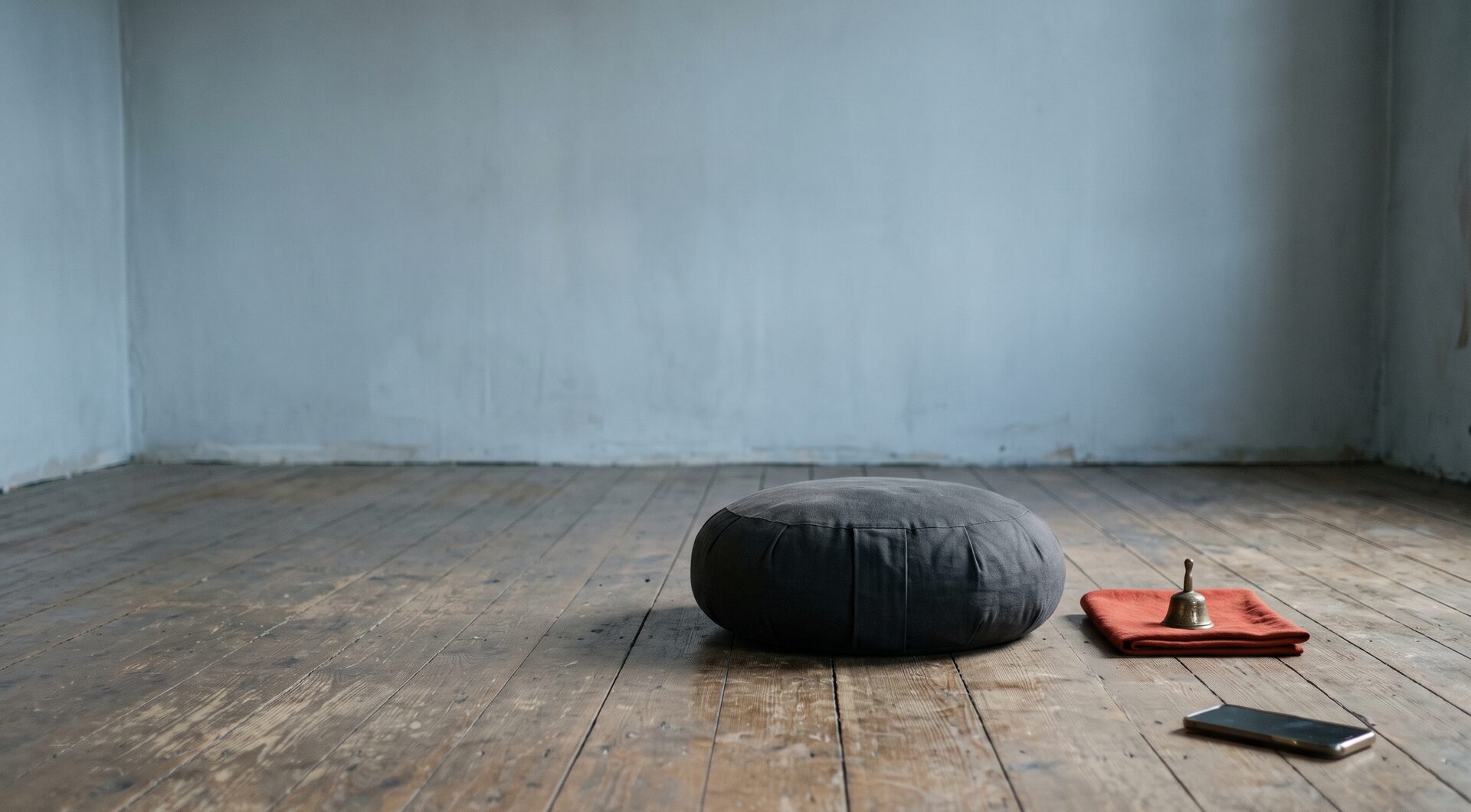
Meditation retreats ran on bells long before they ran on anything else. A day of intensive practice has a timetable: an hour of sitting, a bell, an hour of walking, another bell, from before dawn until the evening talk. Nobody in that schedule is guessing how long they have been still. The bell decides, and the practice fills the space the bell makes.
Somewhere between the monastery and the phone, the bell turned into a subscription with a library of guided content. A sit asks less of a clock than the app shelves imply: hold the length, sound at the edges, stay quiet about everything else. An interval timer holds that exact job description.
The sit is already an interval
Strip the ritual down and a sitting session has the anatomy the interval timer guide draws for every interval session: prepare, work, rest, rounds. Sitting is the work. Walking is the rest. A session is rounds of the two with a cue at each boundary. The overview of interval timing past the gym made the mapping once; this one is the practice manual: session shapes, breath patterns, what a still room asks of the hardware.
The numbers are yours. A beginner’s session is one round of 5:00 and a bell at the end. The classic shape pairs ten minutes sitting with five minutes walking, three rounds — 45:00 end to end — and the final walk plays out in full as the ramp back into the room. Long practitioners sit 20:00 and 30:00 blocks. Retreat centers argue about 40 versus 60 minutes; the structure holds at every size, typed in whole seconds, 10:00 entered as 10:00.
Timing the breath
Breath work brings the rhythm, and the rhythms are intervals with the labels filed off. Box breathing — four in, four held, four out, four held — maps onto work and rest one-to-one, and that piece covers the counting problem in detail. Two other shapes do different jobs.
Coherent breathing drops the holds and slows the pace: five seconds in, five seconds out, ten seconds a cycle, six breaths a minute. On a timer that is work 5, rest 5, and however many rounds the sitting lasts — thirty rounds buys five minutes. The pace that suits your physiology lands somewhere near six for most people; five and five is the standard starting point, adjusted from there.
4-7-8 runs uneven: four in, seven held, eight out, nineteen seconds a cycle, six cycles a shade under two minutes. Uneven phases refuse a single work/rest pair, and forcing them through one mangles the count. Encode it as a list of three rounds with different lengths cycling in order — the per-round list machinery a ladder workout is built on, where every round carries its own number. And some techniques want no clock at all: a double inhale with one long exhale, repeated a few times, is over in seconds, and timing it is pure overhead. A pattern earns a timer by repeating; one-offs do not.
Stillness and the peek
A still sit has one characteristic failure. Twenty minutes in, the question of how long it has been floats up, and every available answer costs something. Estimate, and the estimate is noise — the untimed sense of elapsed time drifts badly in deep stillness. Open your eyes and find a clock, and the sit breaks at the exact moment keeping it unbroken was the exercise. A bell set in advance dissolves the question. Screen-off training cuts the same deal for workouts: the phone goes face-down beside you, and the machine keeps the boundary.
Two caveats belong here. Some traditions sit untimed and treat time-awareness itself as part of the work; that is a practice with a reason behind it. And a bell can end a sit too abruptly on a hard day; a short transition cue before the final one gives you a few seconds to surface, the way choosing what your room hears deserves ten real seconds of setup. In a quiet room, cue volume carries weight: a beep sized for a gym floor is an alarm at arm’s length, and separate volumes for voice, tones and any background audio let you set the bell to carry while everything else stays low.
Three presets to start
- Sit 5. One round, 5:00, end bell. This is the whole practice for a while, and starting it is one tap once it is saved.
- Sit–walk 10/5. Ten sitting, five walking, three rounds. 45:00 end to end, last walk included.
- Coherent 6. Work 5, rest 5, sixty rounds: ten minutes at six breaths a minute.
Saved under a name, each of these outlives mood and phone upgrades alike — the preset habit, and why it matters more than any single session, has its own piece. The free tier of Intertakt holds three custom plans, which is one meditation practice, one breathing practice and one experiment; a single Premium payment in Google Play removes the cap and adds session history with export, if the practice grows past three.
What a quiet room asks of the clock
The demands are small and specific. Accuracy: drift that would pass unnoticed at the gym reorganizes a sit, because in stillness the bell is the only thing marking the boundary — how timers drift and how to catch it matters even more here. And restraint: no account to create before your first sit, no session cap, no ads. No timer should need a login; a meditation clock least of all. Getting started here should be a single tap followed by silence.
Intertakt runs it exactly that way: lengths typed in whole seconds, separate volumes for voice, tones and music, a final bell distinct from mid-session cues, a screen that locks while the session runs unattended face-down, and cues in English, Russian and Spanish. It is out on Google Play. If you want one email when the iOS version lands, leave your address on the waitlist.
This is the second spoke of the series on timing drifting past the gym; the first was box breathing, and 45/15 focus cycles points the same hardware at attention spans. The sit ends the way a retreat day ends — a bell, then the ordinary world, still there, holding still for a few more seconds while you come back.
FAQ
Do I need a timer to meditate?
No. Plenty of people sit well by feel, and some schools build the practice around releasing the clock entirely. The case for a bell is practical: mid-sit, the only way to answer 'how long has it been' is to look, and looking ends the concentration the sit was building. Hand the length to a clock and the question stops arriving.
How long should a meditation session be?
Five minutes, one round, is an honest start. Move up when five stops feeling like work: the usual next step is three cycles of ten minutes on the cushion and five on your feet, 45 minutes in all with the closing walk included. A thirty-minute sit is a different animal from a five-minute one, and the timer carries both without changes.
Can an interval timer handle breathing patterns like 4-7-8?
Yes, with one distinction. Patterns with equal phases, like box breathing, drop straight into the work and rest fields. Patterns with unequal phases, like 4-7-8, need each phase entered as a separate round in a list, the format used for ladder workouts, where consecutive rounds are allowed to differ. Anything measured in a handful of seconds — a physiological sigh, say — repeats too briefly to be worth scheduling.
Will this replace a meditation app?
For self-directed sitting, yes: it supplies the boundaries and the breath rounds as named presets without asking you to register. For guided sessions — a voice leading you through the practice — no; that is a different product doing a different job.
Time the hold. Keep your eyes closed.
Set a 30-second hold or a 4-4-4-4 breath once. A voice marks each change and a bell ends the practice, screen off. No account needed.
Get it onGoogle PlayOn an iPhone? Leave an email and get one message when the iOS app ships.
One email only. Unsubscribe in one click.