Stretching holds: why 30-second timers work
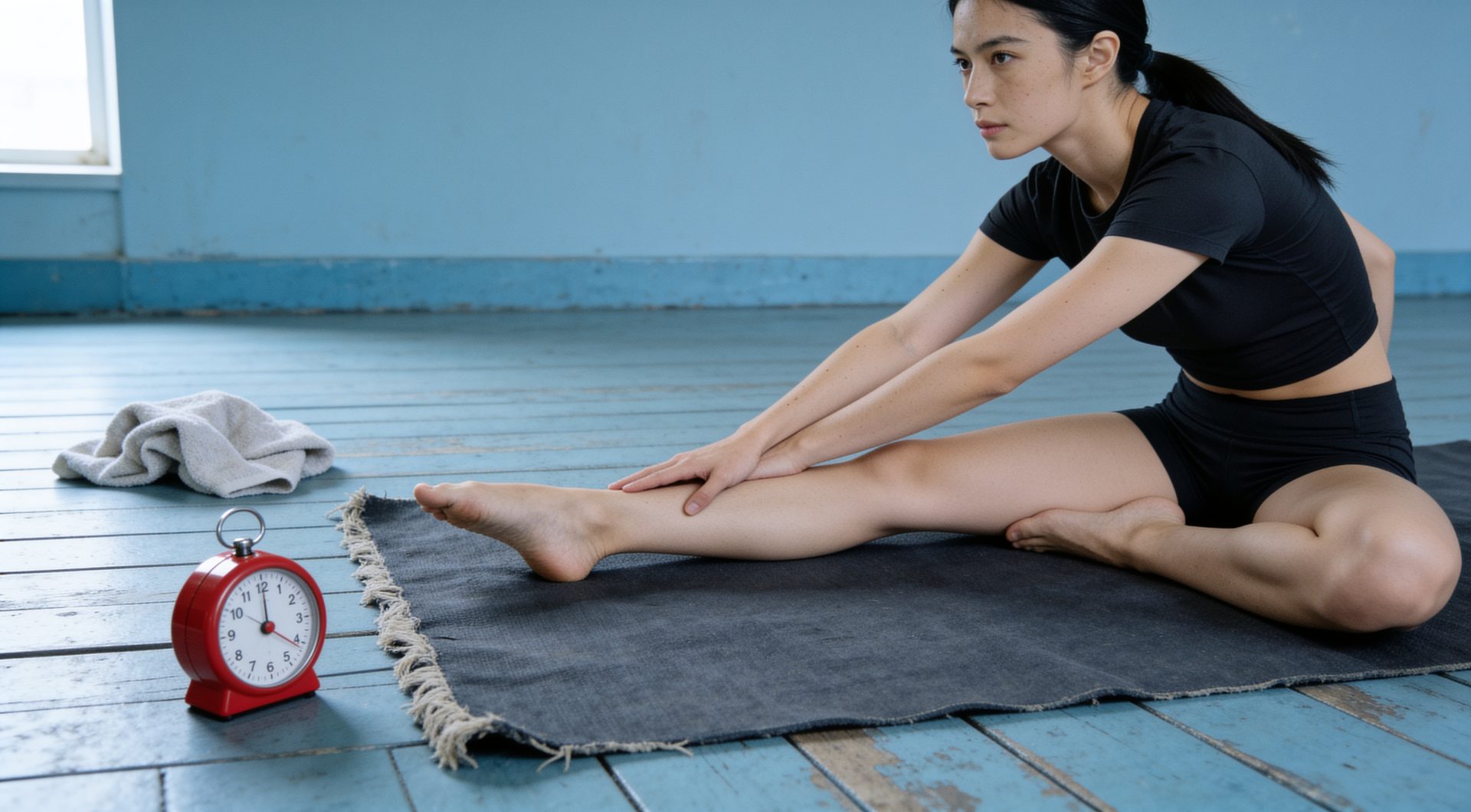
Second twenty of a hamstring hold, the count in your head stops being arithmetic and becomes a negotiation. Five more. Three. Fine, two. The stretch was programmed at thirty seconds; it ends somewhere near nineteen, and the record upstairs says it ran the full thirty.
Nobody is lying. Counting through discomfort asks your attention to be in two places at once, and the sensation usually wins. Reaching the position is the easy half. The training happens during the stay, and the useful part of it begins after the first complaint fades, so a count that folds at second twenty cuts the hold short of its own payoff.
Handing the count to a clock predates every app in this category, and it is still the whole fix. A stretching timer runs each hold to the number it was given, first side and second, and keeps doing it through the whole block.
A hold, translated into fields
Stretching asks nothing new of the hardware: the fields that run a Tabata run a calf stretch. The interval timer guide lays out those fields in full, prepare included, and stretching is one of the calmer things they do. The hold goes in the work slot, the switch to the other leg in the rest slot, rounds covers the pairs. Thirty seconds of hold, fifteen to switch, eight stretches a side: the block runs twelve minutes, and both legs got the same deal.
Every number is yours to set: thirty for general work, forty-five or sixty where a muscle refuses to give, any whole-second value if a coach prescribed something odd. Save the block under a name and it is two taps away, which is often what decides whether Tuesday’s stretching happens.
Why the count drifts
Run the experiment once. Count a hold you are certain takes thirty seconds, honestly, in your head; then time the same stretch with a clock running. Some people come in fast, done at eighteen and sure it was thirty. Some run slow, holding forty-five because the tally stalled somewhere and nothing was watching it. The error differs from person to person, but it comes from the same place: during a hold, attention is on the sensation, and the count is running unattended.
A clock does not share any of that. It starts the hold, it ends the hold, and it treats the second side exactly like the first. Second sides tend to collect whatever patience is left over from the first, and when the count lived in your head, the left hamstring got the careful thirty while the right got whatever remained of it.
Where holds belong
Long static holds sit best at the end of training, or in a standalone block hours away from it. A long hold parks the muscle at a new length, and a muscle held long needs a few minutes before it will produce force freely again; that is why the long holds usually land in the cool-down, with short or moving ones before training. The session-shape version of that, a ramp before and a numbered descent after, is worked out in the full-session guide, and a stretching block fits the descent or stands alone. Plenty of stretching also happens at night, on a living-room floor with the TV on, attached to no workout at all.
Inside a circuit, mobility work is one station among the lifts: short holds, ten to fifteen seconds, keeping range warm between lifts and saving the lengthening for later. A circuit timer handles it like any other station.
The clock you are not watching
Stretching positions point your eyes somewhere useless: in a forward fold you are looking at your knees, in a hip stretch at the ceiling, and plenty of people just close their eyes for the duration. So the timer has to arrive by ear. A cue when the hold ends, a countdown into the switch, a bell at the end of the block; the phone can lie face-down beside the mat and still run the whole session.
Rest, the easiest field to dismiss as dead time, is the switch-sides window; if you want three slow breaths between stretches, it is those too. The round-rest guide gives the gap a fuller treatment. Near the end of a block that runs hold-to-hold with nothing between, you will be looking for reasons to stop early, which is the sign the gap belonged in the program.
Those four slots have a life outside the gym, too. Meditation sits, practice blocks, cold-water rounds: non-fitness timing runs on the same fields.
Intertakt runs stretching blocks on any whole-second hold, with rest and rounds for the pairs, saved as a preset under a name you will still recognize next Sunday. Voice cues say what the clock is doing while your eyes are wherever the stretch put them, and the phone can stay face-down until the final bell. The core timer is free, and it does not put ads mid-set or a cap on how many sessions you keep. Intertakt is out on Google Play. If you want one email when the iOS version lands, leave your address on the waitlist.
FAQ
How long should I hold each stretch?
Thirty seconds is the default that suits most of the body. Keep a minute in reserve for the stubborn spots, drop to ten or fifteen for anything you do before lifting, and remember that repeated moderate holds are easier to keep honest than one heroic one. The rest field between holds is where you change sides.
Can I just count in my head?
You can, and it is worth doing exactly once, as a check. Pick a stretch, count what you believe is thirty seconds, then repeat it with an audible cue doing the timing. The two numbers are rarely neighbors, and whatever you learn about your count applies to every stretch you have ever timed by feel.
How do I keep both sides even?
Build the pair into one round so the timer does the bookkeeping: the left hold on work, the switch during rest, the right hold next. Both sides then receive identical counts whether you are fresh or bored. A side that is genuinely tighter gets its own preset instead of extra seconds added by feel.
Should I stretch before or after training?
Save the long holds for after training, or for an evening block on its own. Right before lifting, a long-held muscle will not push hard, so warm-up stretching stays short or keeps moving; the still, patient holds come at the end. A ten-minute block before bed, unrelated to any training that day, works just as well.
Time the hold. Keep your eyes closed.
Set a 30-second hold or a 4-4-4-4 breath once. A voice marks each change and a bell ends the practice, screen off. No account needed.
Get it onGoogle PlayOn an iPhone? Leave an email and get one message when the iOS app ships.
One email only. Unsubscribe in one click.