Jump rope intervals: timing skips, sets and rests
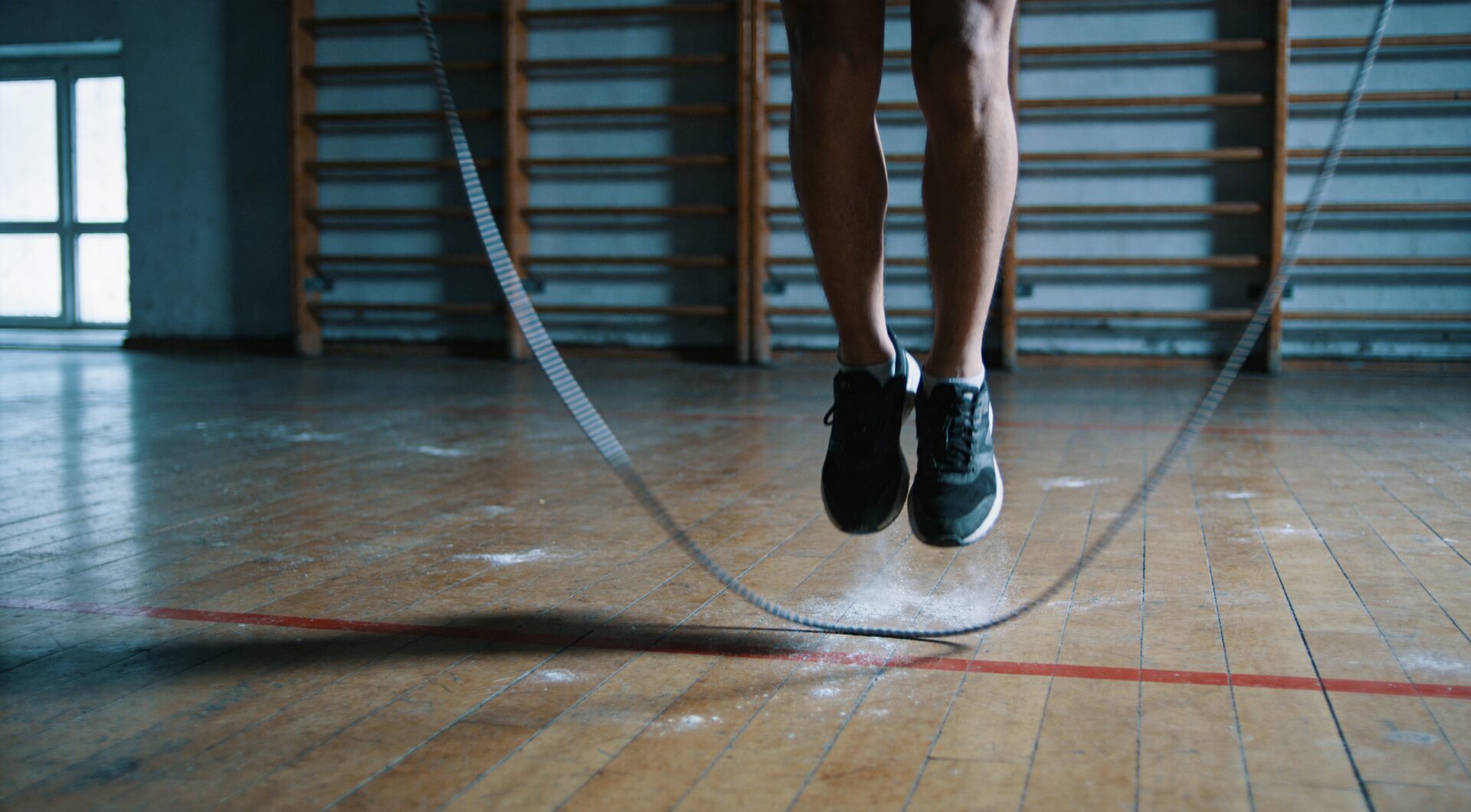
One hundred skips is two different workouts. Turn the rope once a second, the way most people start, and the set runs 1:40. Turn it twice a second, a speed practiced jumpers hold without thinking, and those hundred skips are over in fifty seconds. The plan never changed, and the dose halved.
Every rep-counted rope session carries that arithmetic inside it. Skips are a unit that shrinks as you improve, which is the opposite of what a training dose should do. The fix is old, and it is the one rounds and intervals have always used: run the rope on the clock.
A jump rope interval is a fixed block of skipping with a fixed rest, in place of a rep count: thirty seconds on, thirty off, eight to twelve rounds is the default shape. Endurance work stretches the block to two or three minutes, skill work shrinks it to walls of ten to twenty seconds for footwork and double-unders.
The count is a moving unit
A skip is one turn of the rope, at whatever speed you are turning, and that speed is the fastest-changing number in the room. A month of practice moves a jumper from sixty turns a minute to a hundred and twenty, and every counted set quietly halves itself along the way.
Counting also costs attention. Someone has to keep the tally, and at speed that someone is you, tracking numbers in your head while timing your feet. The session runs on two clocks, one on the phone and one in your head, and the one in your head is the one that drifts.
A timed interval deletes the inner clock. Work becomes a wall of seconds, thirty or forty-five or two minutes, and the rope fills it at whatever rate today allows. Fresh, the rate is high and the interval is dense. Tired, the rate drops and the interval still runs its full length, just thinner. Either way the number on the program is the number you did. An interval timer runs on four numbers: prepare, work, rest, rounds. A rope session fits them without modification.
A trip is not an emergency
Rope sessions at speed include trips. Not as failures, as weather: the rope catches a toe, everything stops for two seconds, the next attempt starts. Anyone who has watched skilled jumpers warm up has seen the pattern, miss, reset, miss, reset, then a long clean run.
A counted set has nowhere to put a trip. You lose the tally, restart from zero, or guess, and all three options spoil the number you were collecting. A timed interval absorbs a trip the way a round absorbs a clinch: the clock keeps running, your feet reset, the work resumes inside the interval you are already in. A thirty-second set with two trips is still close to thirty seconds of rope. A hundred skips with two trips is an unknown quantity, and nobody, including you, knows which one you did.
That is the second argument for timing rope work. The timer will not make anyone a better jumper, but it makes the session measurable on the days the rope behaves badly, which is most days at the beginning and plenty of days after.
Splits that fit the rope
Three shapes cover most rope training.
Conditioning is 30/30 or 45/15: a steady cadence for the work, full standing rest, eight to twelve rounds. The 1:1 version is honest general work; 45/15 pushes toward the uncomfortable end and the session shortens to match.
Endurance rounds run 2:00 to 3:00 continuous, at a pace you could narrate a sentence through, with a minute back. Rope tempo work has a specific fatigue signature, calves and forearms giving out before the breath does, and the rest interval exists for that tissue as much as for the lungs.
Skill work inverts the ratio. Short walls of ten to twenty seconds, long rest, because footwork and double-unders are precision work, best practiced fresh.
Rest itself is part of the program. Flat rest, a longer break every few rounds, a ratio that changes partway through the session: rest structures are laid out here, and the ratio is the dial that sets what a round costs. For rope, one rule of thumb carries most of the weight. If the first five seconds of an interval come out sloppy, the rest before it was too short.
Double-unders get their own clock
A double-under turns the rope twice per jump, which means a higher jump and roughly double the power for the time on the clock. Two consequences follow. The misses multiply, and every rep costs more, so a rep target like “fifty double-unders” turns practice into a session of counting failures.
Timing reframes it. Twenty seconds of attempts with forty to sixty back, ten rounds through, gives the session a fixed budget: attempts land in whatever state they come, unbroken strings early, singles and stumbles late, and the metric becomes clean turns per window, a number that moves week to week even when the breakthrough has not arrived. Ladders work the same way, five singles into one double, four into two, down to straight doubles, each rung a short timed block.
Double-under progress is famously non-linear, weeks of nothing and then a sudden unblocking. A fixed window keeps the plateau visible: the window holds at twenty seconds while the clean turns climb, on the days when “I finally got it” is still pending.
The rope as a station
The rope earns a place inside bigger sessions too. Paired with strength it is the cheapest heart-rate instrument in the gym: forty seconds of rope, twenty back, forty of push-ups, round after round, with no equipment beyond a floor. Inside a circuit it is the station that keeps the pulse up between lifts, and a circuit timer handles it like any other station, with separate work and rest numbers if the rope block wants them.
On days when impact is the problem, the low-impact sibling is the mat: rebounder intervals trade some intensity for a landing the surface absorbs, and the two pair well across a week, rope when the knees are quiet, bounce when they are not.
Programmed once, either shape becomes a preset with a name. Rope blocks in a mixed session usually want different numbers from the lifting around them, and a per-exercise list carries both in one run without a reset in the middle.
Intertakt runs rope sessions on any whole-second work, rest and round numbers, saved under a name you will still recognize next week. Voice cues earn their keep here more than anywhere. Mid-skip, your eyes are down and you leave the floor twice a second, so the interval has to arrive by ear. The core timer is free, with no ads mid-set and no cap on sessions. Intertakt is out on Google Play. If you want one email when the iOS version lands, leave your address on the waitlist.
FAQ
Is it better to jump rope for time or for reps?
For training, time. A rep count shrinks as your turn rate improves, so a session of fixed reps gets shorter every month without you deciding anything. A timed interval holds the dose and lets intensity be the variable, and it absorbs trips without losing the number.
How long should a jump rope interval be?
Thirty seconds of steady skipping covers most conditioning, with equal rest. Shorter walls of ten to twenty seconds suit footwork and double-unders, where precision matters more than volume. Endurance rounds run two to three minutes continuous at a pace you could speak a sentence through.
How much rest do rope intervals need?
Go by fatigue first, breath second. Calves and forearms usually complain before the lungs in rope work, so if the first five seconds of the next interval are sloppy, the previous rest was too short. A 1:1 split is the honest default; double-unders want two to three times the work interval.
How do I count skips when I keep tripping?
Mostly, you stop needing to. In a timed interval a trip costs a reset and a couple of seconds, and the clock absorbs it. If you need a count for a fitness test, count only clean runs and log trips separately; the trip rate is often the more informative number.
How many ropes should I have in my set?
One speed rope covers all of the interval work above, so the honest minimum is one. A second earns its place when training splits by type: a light rope for footwork and double-unders, a weighted one for strength blocks, and a two-rope set handles anything a program will ask. Past two you are collecting rather than training, and the intervals do not care what the rope weighs.
Pool send-offs and plunge minutes on one clock
The beep has its own volume, so the send-off can be the loudest sound poolside. Cold and warm blocks share one session with different times.
Get it onGoogle PlayOn an iPhone? Leave an email and get one message when the iOS app ships.
One email only. Unsubscribe in one click.